Your stash has more potential than you think.
Have You Tried Using a Blending Board?
Maybe yours is still in the box.
Maybe you made a few wonky rolags and gave up.
Maybe you love color but hate how stripe‑y your yarn turns out.
Or maybe you have bins of fiber you’re not excited about anymore.
The Blending Board Workshop will change that.
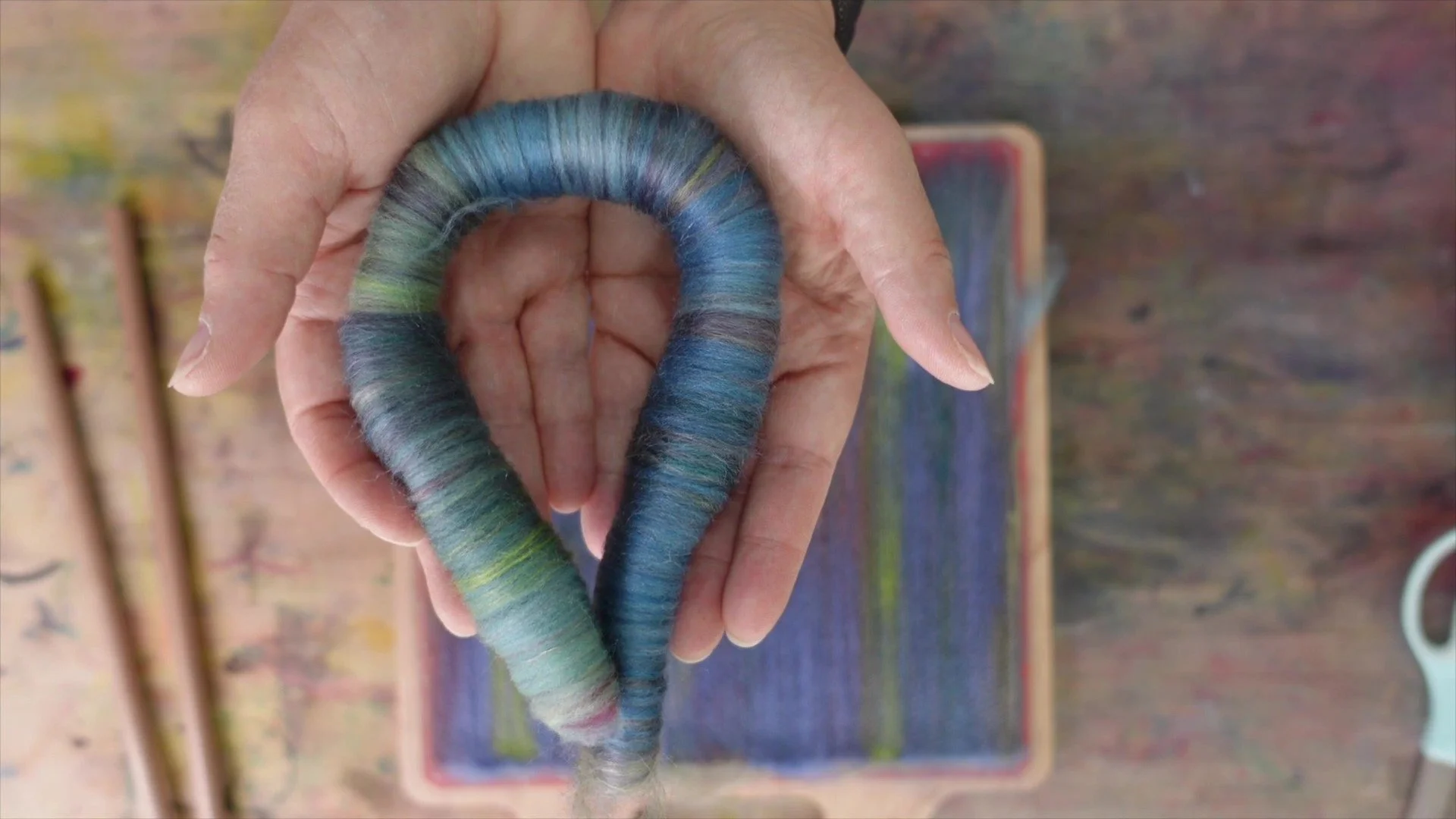
It’s my complete, self‑paced class - for $99 USD - that teaches you how to confidently use a blending board to create beautiful rolags and spin them into textured, nuanced yarn that doesn’t stripe but still rewards the eye.
When I bought my blending board, I was excited.
I’d seen what was possible. I’d watched other spinners make these beautiful, textured rolags that looked like little works of art.
And then? It sat.
Unused. Unloved. Still in the box.
For a long time, I just didn’t have the bandwidth to learn a new tool.
When I finally pulled it out and committed to figuring it out, there were plenty of awkward rolags. Some strange color choices. A few “what on earth was I thinking?” moments.
And then something shifted.
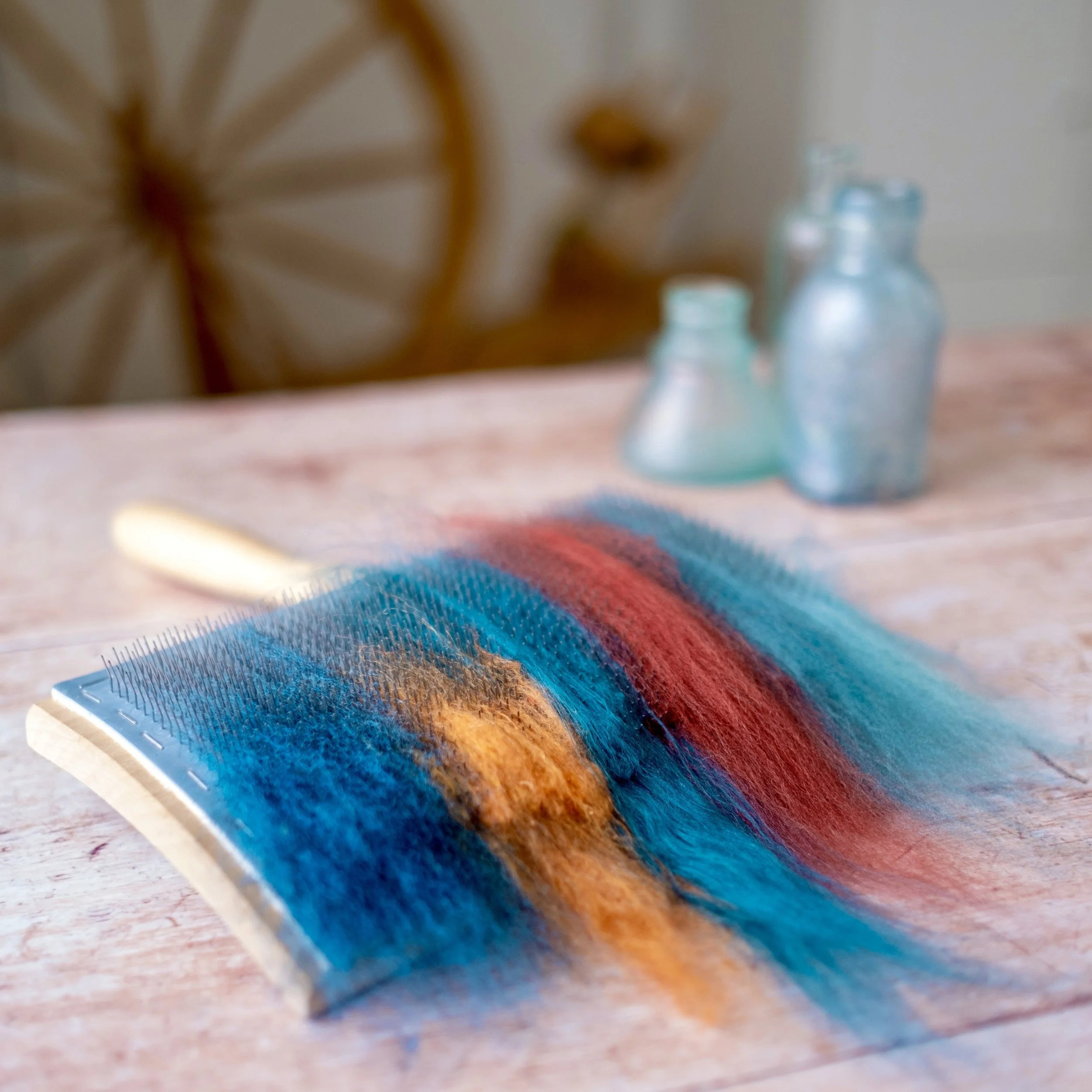
After a lot of experimentation, the blending board became my hands-down favorite prep tool.
Why?
Because it lets you:
Play with different fibers and textures
Use up odds and ends from your stash
Loosen compressed or slightly felted fiber
Rescue colorways you’ve fallen out of love with
Create rich, complex color instead of harsh striping
Dial in exactly how much texture you want in your yarn
Even tiny bits of fluff can make a big impact in blending-board rolags.
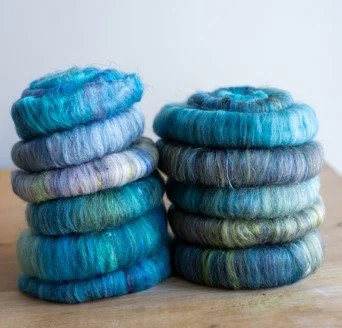
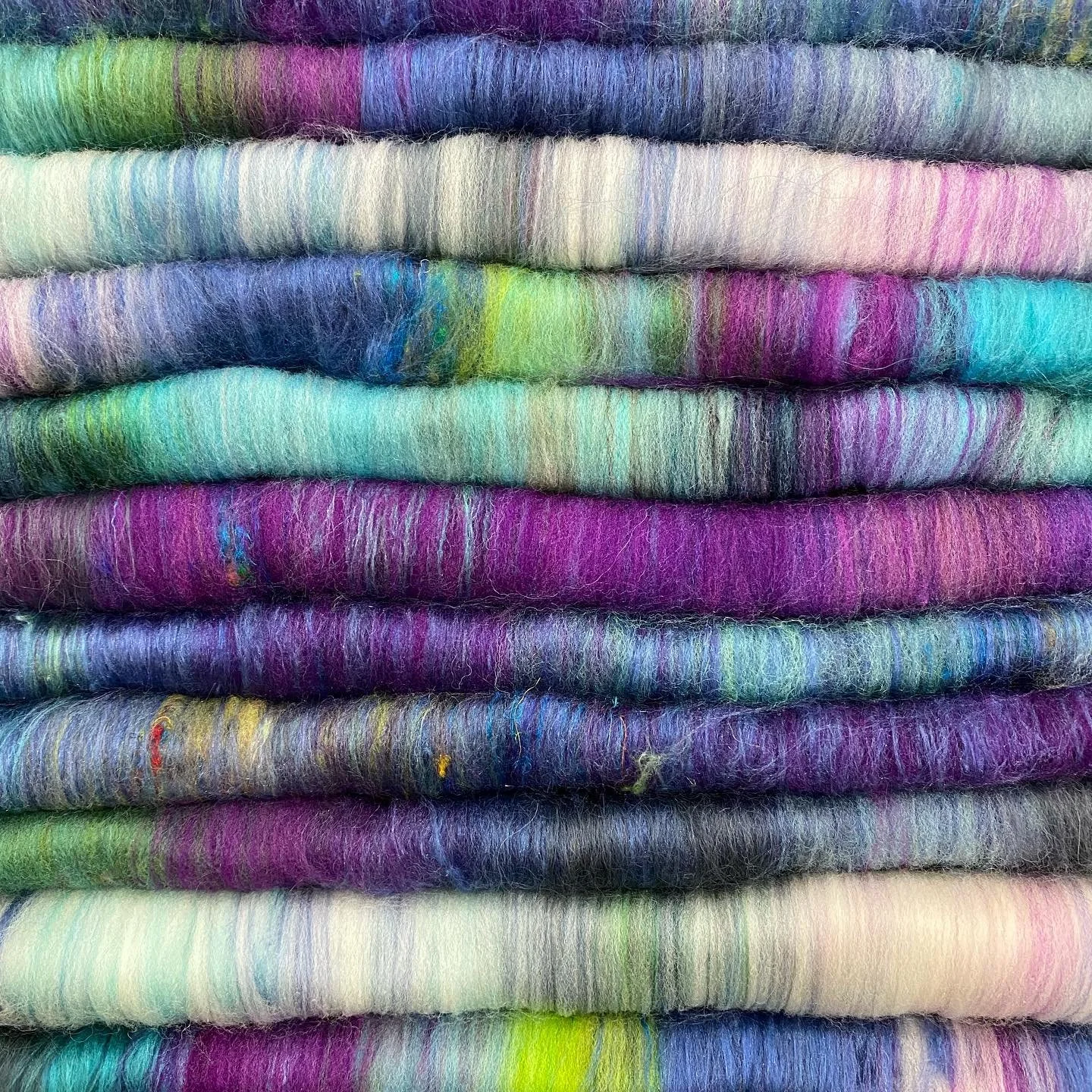
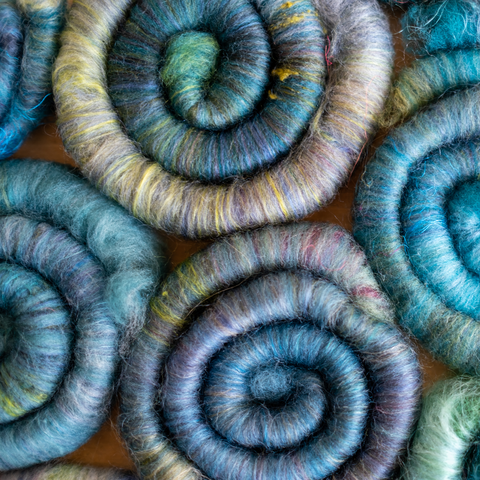
Inside the Blending Board Workshop, you’ll learn:
How to Use a Blending Board Confidently
How a blending board works
What to look for if you’re buying one
How to load and remove fiber correctly
How to avoid common beginner mistakes
How to Spin Your Rolags into Yarn You Love
Managing texture
Avoiding harsh striping
Making yarn that “averages out” visually
Creating fabric with depth instead of obvious color pooling
How to Create Beautiful Rolags
Fiber selection strategies
Choosing and combining colors
Building subtle, complex hues
Creating more or less monochromatic blends
Troubleshooting uneven or awkward rolags
I break down my exact process — including how I use a color wheel to build complex blends that don’t stripe but still reward the eye with variation.
How to Choose a Blending Board
Blending boards look complicated, but they’re actually one of the simplest tools in fiber prep.
Many boards come with additional tools such as a packing brush, dowels for rolling rolags, or a keel (stand) to angle the board. These features can be helpful but are not essential — the most important thing to consider when choosing a blending board is the carding cloth and its TPI.
The best approach is to select a board based on the types of fibers you like to spin and the texture you want in your finished yarn.
Use Your Stash Instead of Buying More
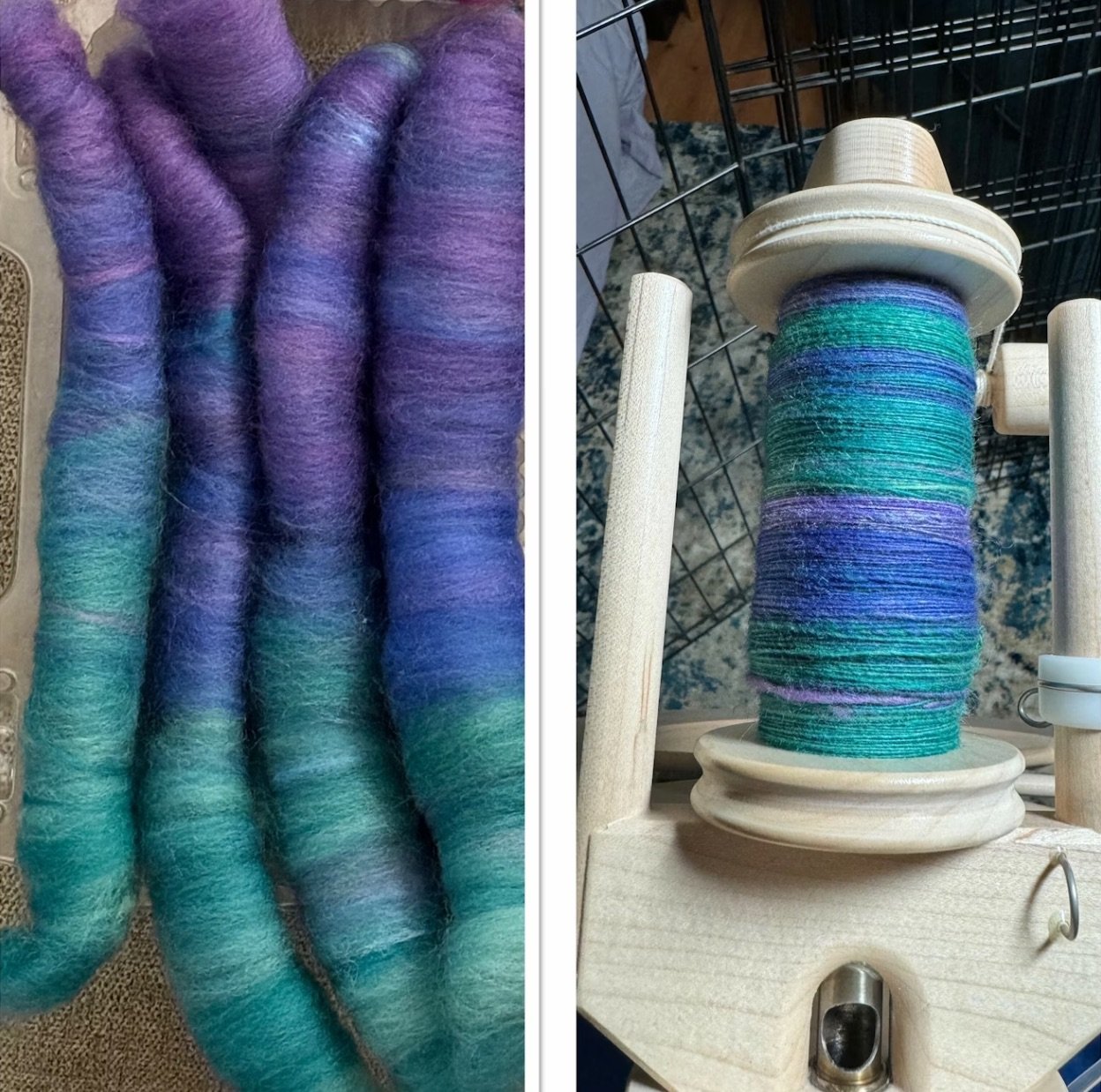
Colorways you don’t love anymore?
Leftover bits of fiber?
Compressed fiber from years in storage?
You can use it all.
The blending board is one of the best tools for:
De-stashing creatively
Blending small amounts into cohesive color
Turning “meh” fiber into something exciting
Making rich, nuanced yarn from what you already own
If you’re the kind of spinner who saves every bit of fiber, this class will open up a whole new world of possibility.
Check out these comments from past students:
FREQUENTLY ASKED QUESTIONS
-
No. If you already have one, you’ll be able to start practicing right away.
If you don’t, the workshop includes guidance on what to look for when buying a blending board so you can choose one confidently.
-
Yes.
You don’t need advanced spinning skills. If you can spin yarn and want to improve how you prepare fiber and control color, you’ll be able to follow along.
-
You’ll need:
A blending board
Some fiber from your stash
A spinning wheel or spindle
That’s it. Many students use leftover bits of fiber they already have.
-
Most students go through the lessons in a few hours, but the real value comes from practicing and experimenting with your own blends.
You can move through the material at whatever pace works for you.
-
That’s exactly why this workshop exists.
Many spinners try a blending board once, make a few awkward rolags, and assume the tool just isn’t for them. Once you understand fiber loading, color strategy, and rolag structure, everything becomes much easier.
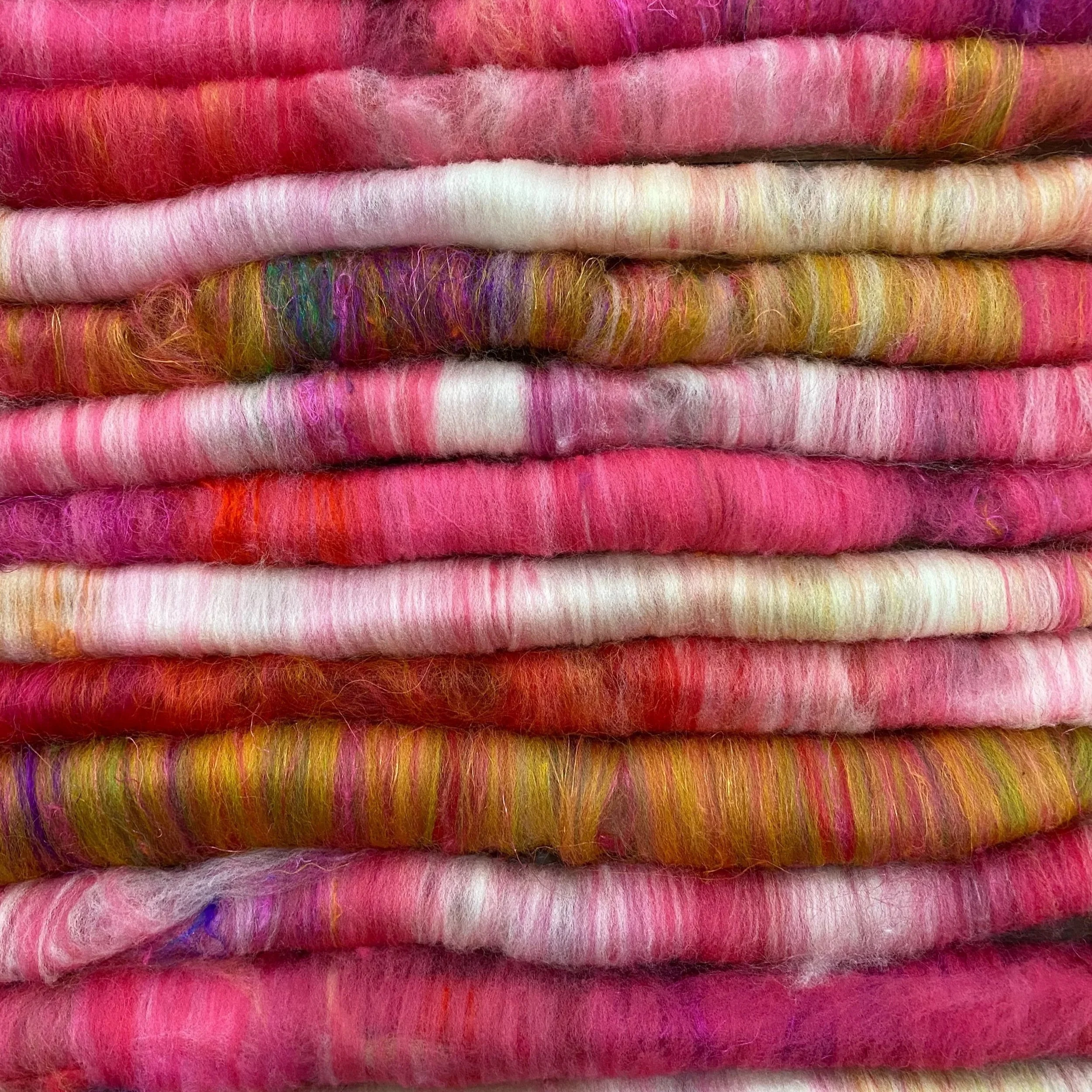
Your Blending Board Has More to Offer Than You Think.
Inside your stash are dozens of possibilities.
Colors you once loved.
Tiny leftover bits of fiber.
Textures waiting to be combined in new ways.
The blending board is the tool that brings all of that together.
Once you know how to use it, the process becomes playful, creative, and endlessly interesting.
And the yarn you spin begins to reflect that.
Let’s turn those fibers into something extraordinary.

About Sasha Torres
Sasha Torres, a recognized expert in hand spinning, boasts a PhD from Cornell University and almost four decades of teaching adult learners as a tenured Associate Professor at the University of Western Ontario and as a former faculty member at esteemed institutions such as Harvard, Brown, Dartmouth, and Johns Hopkins. Founder of Sheepspot, she has spent over a decade in the fiber arts business, excelling as both a spinning teacher and fiber dyer.
In addition to her scholarly contributions, which include a book, an anthology of scholarly articles, and numerous articles in academic journals, Sasha's impact extends to broader audiences through articles in Ply Magazine and features in Spin-Off.
Additionally, she has created and hosted two spinning podcasts, The SpinDoctor Podcast and The Sheepspot Podcast, which together have amassed over 200K downloads.
Sasha's innovative approach to spinning education is encapsulated in The Spinner's Journey™ and Pillars of Skillful Spinning™ frameworks, a comprehensive curriculum guiding students from confusion and frustration to the joy of consistently creating yarns they love. Her proprietary methodology ensures spinners of all levels find satisfaction in crafting yarn they genuinely adore.